Address
304 North Cardinal St.
Dorchester Center, MA 02124
Work Hours
Monday to Friday: 7AM - 7PM
Weekend: 10AM - 5PM

Address
304 North Cardinal St.
Dorchester Center, MA 02124
Work Hours
Monday to Friday: 7AM - 7PM
Weekend: 10AM - 5PM

 Byadmin
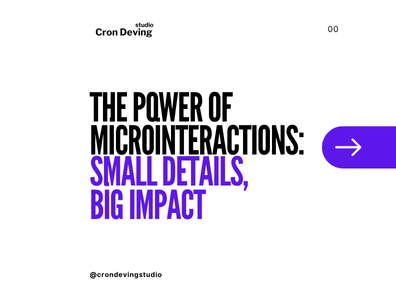
Microinteractions are those subtle design elements that respond to user actions — and while they may seem insignificant, they play a powerful role in enhancing user experience. This article explores what microinteractions are, why they matter, and how they can elevate your UI from functional to delightful.
They are the small responses within a user interface that react to actions: a button that bounces slightly when clicked, a heart icon that fills in with color, or a loading spinner that reassures a user something is happening. These brief, feedback-driven animations provide users with context and acknowledgment.
Microinteractions improve usability by offering instant feedback, helping users understand the outcome of their actions. They also create emotional engagement — a sense that the interface is alive, responsive, and thoughtful. When used appropriately, they can make digital experiences feel more human.
These interactions appear in buttons, form validations, toggles, menus, and loading states. Even the smallest movement can help reduce user friction, build trust, and guide the user through tasks.
While microinteractions can add polish, overusing them can overwhelm or distract users. The key is subtlety and context — ensure they align with the overall design system and serve a purpose beyond aesthetics.
Great microinteractions are often unnoticed — not because they’re unimportant, but because they blend naturally into the experience. They’re the unspoken language of interface design.